Corrosion Test Standards and Suitable Test Chambers

Salt spray • Condensation humidity • SO₂ atmosphere • Cyclic corrosion • Alternating immersion tests
Corrosion test standards define laboratory methods used to comparatively assess the resistance of metals, coatings, paints, electronic components, and assembled products to specified corrosive atmospheres.
Depending on the applicable standard, samples may be exposed to:
- Salt spray atmospheres,
- Continuous or alternating condensation humidity,
- Humid atmospheres containing sulfur dioxide,
- Wet, dry, and controlled humidity cycles,
- Rain spray and hot-air stages,
- Low-temperature conditions,
- Alternating cycles of immersion in and withdrawal from a salt solution.
Not every test chamber can perform tests according to every standard. Chamber suitability should be determined not only by its test volume or temperature range, but also by evaluating all the spray, condensation, ventilation, drying, relative humidity control, gas dosing, rain spray, and cooling processes required by the standard.
Standard and Chamber Selection Table
| Test Family | Main Standards | Basic System Requirements | Suitable Liebisch Chamber Family |
|---|---|---|---|
| Continuous salt spray | ISO 9227, ASTM B117, ASTM B368, JIS Z 2371, IEC 60068-2-11 | S | ConstaSal, ConstaTwin, ConstaMatic |
| Condensation humidity | ISO 6270-1, ISO 6270-2, DIN 50958 | K; B if required for alternating methods | Constanzo, ConstaCon, ConstaTwin, ConstaMatic |
| Humid SO₂ atmosphere | ISO 22479, former DIN 50018 methods | K and G; B depending on the method | Constanzo + Gasomat or a suitable ConstaMatic |
| Modified salt spray | ASTM G85 annexes | S together with B, W, or other systems required by the standard | Suitable ConstaMatic configuration |
| Cyclic corrosion | ISO 11997-1, ISO 16701, IEC 60068-2-52, and manufacturer specifications | SKB, SKBW, SKBWF, SKBWFR, or a system with cooling, depending on the test cycle | ConstaMatic |
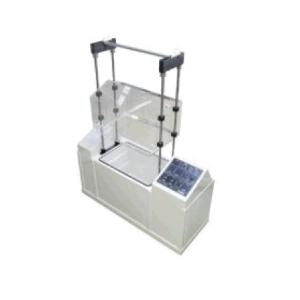
| Alternating immersion | ISO 15710, EN 3212 | Dedicated immersion and withdrawal mechanism | Dippomat |
What Does a Corrosion Test Standard Specify?
Corrosion test standards generally define the following conditions for creating and controlling the test atmosphere:
- Chemical composition of the test solution
- Quality of the water used in the solution
- Solution pH and concentration range
- Test chamber temperature
- Relative humidity conditions
- Spray application rate or solution collection rate
- Sample positioning
- Duration and sequence of test stages
- Chamber ventilation conditions
- Drying or conditioning stages
- Test chamber verification
- Information to be included in the test report
However, many general test standards do not, on their own, specify the total test duration or acceptance criteria for a particular product. The following documents should therefore be considered together when preparing a test plan:
- General test method standard
- Product or coating standard
- Manufacturer or customer specification
- Sample preparation and evaluation standard
- Current revision of the applicable standard
Salt Spray Test Standards
In salt spray testing, a solution containing sodium chloride is sprayed into the test chamber as fine droplets using conditioned compressed air.
The resulting salt fog is distributed uniformly throughout the chamber, and solution droplets settle on the sample surfaces. These tests involve the accumulation of sprayed solution on the samples rather than the condensation of water vapour.
Salt spray tests are particularly used to comparatively assess the corrosion resistance of:
- Metallic coatings,
- Paint and varnish systems,
- Galvanized surfaces,
- Electroplated coatings,
- Fasteners,
- Automotive parts,
- Electrical and electronic components.
ISO 9227 covers three main salt spray methods carried out in artificial atmospheres:
| Method | Description | Main Application |
|---|---|---|
| NSS | Neutral salt spray | General corrosion testing of metals, paint systems, and coatings |
| AASS | Acetic acid salt spray | Certain metallic and decorative coatings |
| CASS | Copper-accelerated acetic acid salt spray | Particularly decorative copper–nickel–chromium and nickel–chromium coatings |
ISO 9227 specifies the requirements for operating the equipment, the test solution, the test atmosphere, and checking chamber corrosivity.
However, the standard does not, on its own, specify the sample type, total test duration, acceptance criteria, or interpretation of results for a particular product. This information must be obtained from the relevant product standard or customer specification.
ISO 9227 tests can be performed using ConstaSal, ConstaTwin, and ConstaMatic chambers equipped with the S salt spray system. Model selection should consider not only chamber volume but also sample dimensions, positioning angle, loading capacity, and required options.
ASTM B117 specifies the apparatus, operating conditions, and procedures required to create and maintain a controlled salt fog environment.
ASTM B117 does not specify a mandatory test duration or acceptance criteria for a particular product. Therefore, the statement “tested according to ASTM B117” should be accompanied by the product specification, test duration, and evaluation method.
ASTM B117 results can be used to compare different coatings under controlled conditions and monitor production quality. However, these results alone should not be regarded as a direct prediction of service life under natural corrosive conditions.
ASTM B368 defines the operating conditions for the copper-accelerated acetic acid salt spray test, also known as the CASS test.
CASS testing is particularly used for quality control and comparative evaluation of:
- Decorative nickel–chromium coatings,
- Copper–nickel–chromium coating systems,
- Electroplated parts,
- Automotive decorative components.
Due to the elevated temperature and the acidic, copper-containing test solution, CASS testing requires suitable chamber materials, proper solution preparation, and appropriate post-test cleaning.
ASTM G85 covers modified salt fog methods involving solutions or cycles that differ from standard neutral salt spray testing.
The standard’s annexes include various methods, such as acidified salt fog, acidified synthetic seawater, and Prohesion. These methods do not all use the same process stages.
For methods that alternate between wet and dry stages, such as Prohesion, the S salt spray system alone may not be sufficient. Depending on the test cycle, a suitable ConstaMatic model equipped with automatic ventilation and a hot air system is required.
IEC 60068-2-11 is a continuous salt mist test method used to evaluate the resistance of electrical, electronic, and electrotechnical products to salt mist exposure.
The test can be used particularly to assess the effects of a saline atmosphere on:
- Electrical performance,
- Metal components,
- Connection points,
- Surface coatings,
- Protective enclosures.
With a suitable chamber configuration and the required options, the following standards may also be considered:
- JIS Z 2371 – Salt spray test methods
- TS EN 13523-8 – Resistance to salt spray of coil-coated metals
- ISO 9022-4 – Salt atmosphere tests for optical and photonic instruments
- MIL-STD-202 Method 101 – Salt atmosphere testing of electronic components
- MIL-STD-810 Method 509 – Salt fog testing of equipment and materials
- Relevant automotive and defence industry specifications
The sample positioning, solution, temperature, and evaluation requirements of each standard should be checked individually.
Condensation Humidity Test Standards
In condensation humidity tests, demineralized water at the bottom of the test chamber is heated. The evaporating water creates high humidity inside the enclosed chamber.
Water condenses on the samples when their surface temperature is lower than that of the chamber atmosphere. This exposes paint, coatings, and metal surfaces to continuous or alternating condensation humidity
ISO 6270-2 defines methods for evaluating the resistance of paint and varnish coatings to condensation humidity in a test chamber equipped with a heated water reservoir.
The standard covers the creation of constant or alternating condensation atmospheres. Depending on the selected method, the test programme may include stages such as:
- Continuous condensation,
- Exchange of the chamber atmosphere,
- Ventilation,
- Exposure to ambient conditions.
The basic K system may be sufficient for continuous condensation. For methods requiring automatic ventilation or alternating atmospheres, a chamber equipped with the B ventilation system should be selected.
Suitable chamber families:
- Constanzo
- ConstaCon
- ConstaTwin
- ConstaMatic
Condensation testing can be performed in manually controlled ConstaTwin models; however, stages requiring automatic ventilation may require operator intervention.
ISO 6270-1 defines a method for determining the resistance of coated test samples under single-sided condensation conditions.
Since sample positioning and the temperature difference at the test surface are critical to this method, a standard condensation humidity chamber should not be considered suitable solely on the basis of similar terminology.
Before placing an order, it should be assessed whether the sample geometry, holder system, and chamber design meet the requirements of the method.
DIN 50017 is a German standard historically widely used for testing in water condensation atmospheres.
Many current references to these methods are now addressed through their counterparts in ISO 6270-2. If DIN 50017 is specified in older technical drawings or customer specifications, the required test atmosphere and the corresponding current standard should be verified.
Depending on the application, the following standards and specifications may also be considered:
- DIN 50958
- References to ISO 6270-1 or ISO 6270-2 in product standards
- Automotive manufacturers’ constant or alternating humidity specifications
- Customer test procedures for coating and paint systems
Related Products:
Humid Atmosphere Tests Containing Sulfur Dioxide
In sulfur dioxide tests, samples are exposed to a warm, humid chamber atmosphere containing a controlled quantity of SO₂ gas.
Sulfur dioxide interacts with moisture and the surface water film to form an acidic environment. Initially characterized mainly by sulfurous acid, this environment can cause accelerated corrosion of metals and coatings, with oxidation processes also contributing.
These tests are particularly used to evaluate the resistance of:
- Metallic coatings,
- Paint systems,
- Fasteners,
- Construction materials,
- Parts intended for use in industrial atmospheres
to humid, sulfur-containing atmospheres.
ISO 22479 defines a corrosion test performed in a humid atmosphere containing a fixed quantity of sulfur dioxide.
The standard applies to:
- Metals and alloys,
- Metallic coatings,
- Inorganic coatings,
- Organic coating systems.
The SO₂ quantity, test chamber volume, temperature, humidity conditions, and cycle stages should be determined according to the current revision of the standard.
Older product pages or technical specifications may refer to:
- ISO 3231
- ISO 6988
Both standards have been withdrawn and replaced by ISO 22479.
If an older customer specification directly references ISO 3231 or ISO 6988, the test conditions should not be changed automatically. The technical differences between the former method and ISO 22479, along with the current equivalent accepted by the customer, should first be verified.
The designation DIN 50018 and the term “Kesternich test” are still widely used in the industry. However, the standard designation alone should not be used; the gas quantity, test cycle, temperature, and exposure conditions should be clearly specified.
SO₂ tests can be performed using:
- Suitable Constanzo systems equipped with a Gasomat gas dosing unit,
- Suitable ConstaMatic configurations equipped with gas dosing and the required climatic processes.
Because SO₂ gas is toxic and corrosive, the laboratory’s provisions for gas storage, dosing, ventilation, exhaust, gas detection, and occupational safety must also be assessed.
Related Products:
- Constanzo KB 300
- ConstaMatic A‑SC (With a KBG configuration suitable for SO₂ testing)
- ConstaMatic A‑TR (With a KBG configuration suitable for SO₂ testing)
Cyclic Corrosion Test Standards
In cyclic corrosion tests, samples are exposed to different environmental conditions in a defined sequence rather than a single constant atmosphere.
A test cycle may include some of the following processes:
- Salt spray
- Condensation humidity
- Automatic ventilation
- Hot-air drying
- Controlled relative humidity
- Rain spray
- Low temperature
- Exposure to ambient conditions
The cycle is repeated automatically a specified number of times. The aim is to represent, under controlled laboratory conditions, the wetting, drying, and changes in temperature and humidity that materials may encounter during service.
These tests are performed using ConstaMatic chambers equipped with the appropriate process systems.
ISO 11997-1 covers methods for determining the resistance of paint and varnish coatings to defined wet salt fog, dry, and humid cycles.
Salt spray capability alone is not sufficient to carry out testing according to this standard. Depending on the selected cycle, the chamber requires an appropriate combination of:
- S salt spray,
- B ventilation,
- W hot air,
- K condensation humidity or F controlled relative humidity systems.
The exact configuration should be determined according to the ISO 11997-1 cycle to be performed.
ISO 16701 defines an accelerated cyclic corrosion approach for metals and coated metals, incorporating salt deposition and controlled temperature–relative humidity stages.
Since controlled relative humidity and climatic transitions are key elements of the method, a suitable ConstaMatic configuration equipped with the F system should be considered for these tests.
The required salt application method, temperature, relative humidity levels, and transition times should be verified against the current version of the standard.
IEC 60068-2-52 covers cyclic salt mist methods for electrical, electronic, and electrotechnical products that may be exposed to salt-laden atmospheres.
Unlike continuous salt spray testing, the standard includes methods that combine salt mist exposure with other climatic or storage stages.
Depending on the selected method, controlled humidity, drying, or separate conditioning stages may be required in addition to salt spray. Chamber selection should therefore be based on the specific method number within the standard.
Related Products:
Automotive Manufacturer Cyclic Corrosion Specifications
Cyclic corrosion tests used in the automotive industry often involve more detailed processes than general ISO or ASTM methods.
Examples of specification families include:
- VDA 621-415
- VDA 233-102
- VW PV 1210
- GMW 14872
- Legacy GM methods such as GM 9540P
- Renault D17 2028
- Volvo STD 423-0014 and related Volvo methods
- SAE J2334
- Daimler corrosion specifications
- Ford cyclic corrosion methods
- Mazda MCT methods
- Nissan cyclic corrosion methods
- FIAT corrosion test methods
These specifications may require varying combinations of:
- Salt spray,
- Direct solution spraying or rain spray,
- Condensation,
- Controlled relative humidity,
- Hot-air drying,
- Ventilation with ambient air,
- Cooling,
- Humidity and temperature ramps.
It is therefore incorrect to make a general statement that “a ConstaMatic chamber can perform all automotive standards.” The required Liebisch systems must be determined separately for each standard.
Related Products:
Alternating Immersion Test Standards
In alternating immersion tests, samples are fully immersed in a salt solution for specified periods, then withdrawn and held in a warm, high-humidity chamber atmosphere.
This method differs from conventional salt spray testing, in which the salt solution is sprayed as a fine mist.
ISO 15710 covers the evaluation of the corrosion protection provided by paint and varnish coatings on aluminium and aluminium alloys using alternating immersion and withdrawal.
Samples are immersed in and withdrawn from a dilute, buffered sodium chloride solution in a controlled manner. Wet and high-humidity conditions alternate throughout the test period.
EN 3212 is an alternating immersion corrosion test method for paint and varnish systems used in aerospace applications.
Although it shares similar test principles with ISO 15710, the following should be checked individually against the current revision of the applicable standard:
- Solution composition,
- Sample preparation,
- Test duration,
- Scribe geometry,
- Evaluation criteria.
Dippomat, equipped with a dedicated immersion and withdrawal mechanism, should be used to perform ISO 15710 and EN 3212 tests automatically.
Related Products:
How to Select the Right Test Chamber
Before selecting a chamber, the following information should be established:
- Full designation of the applicable standard
- Publication year or current revision of the standard
- Test method, annex, or cycle number to be used
- All process stages required for the test
- Temperature and relative humidity ranges
- Salt mist, rain spray, or immersion application method
- Cooling requirements
- Sample dimensions and weight
- Number of samples to be tested simultaneously
- Sample positioning angle
- Total test duration and annual testing capacity
- Data logging and reporting requirements
- The laboratory’s purified water, compressed air, exhaust, drainage, and electrical infrastructure
Specifying the standard designation alone is not sufficient for some tests. Particularly for cyclic corrosion standards, the method, cycle, and revision details can directly affect the chamber configuration.
Let’s Identify the Right Liebisch System for Your Application
Share your intended test standard, test cycle, sample dimensions, and required capacity with us so we can assess the necessary process systems and a suitable chamber configuration together.
Contact us for assistance with selecting the appropriate Liebisch process system and chamber, and for a technical quotation.