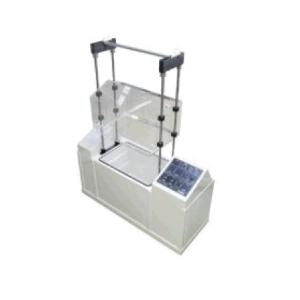
Liebisch Process Systems and Model Codes

Salt spray, condensation humidity, ventilation, hot air, controlled relative humidity, gas dosing, rain spray, and cooling systems

Liebisch corrosion test chambers are configured according to the processes required by the intended test method. The letters in the model names indicate which test systems the chamber is equipped with.
For example, SKBWF denotes a combination of salt spray, condensation humidity, ventilation, hot air, and controlled relative humidity systems. However, this code alone does not mean that the chamber can perform tests according to every cyclic corrosion standard.
The appropriate configuration should be selected by evaluating the test stages, temperature and humidity conditions, transition times, sample characteristics, and required auxiliary equipment together.
What Do Liebisch Process Systems Codes Mean?
| Code | System | Main Function |
|---|---|---|
| S | Salt spray | Sprays the test solution into the chamber as a fine mist. |
| K | Condensation humidity | Uses heated water to create condensation conditions on the samples. |
| B | Ventilation | Passes ambient air through the chamber to exchange the chamber atmosphere. |
| W | Hot air | Supports heating and drying stages using heated air. |
| F | Controlled relative humidity | Regulates the relative humidity of the chamber atmosphere. |
| R | Rain spray | Applies rain spray liquid to the samples. |
| G | Gas dosing | Provides controlled dosing of a specified test gas, such as SO₂. |
| C | CorroCool cooling preparation | Indicates the connections required for an external cooling unit. |
Not every system may be available for every chamber design, volume, or control level. Compatibility between systems and the required auxiliary equipment must be confirmed at the quotation stage.
S – Salt Spray System
ASTM B117, ASTM B368, ISO 9227, JIS Z 2371
The S system is used to spray a salt solution into the test chamber as fine droplets. The mist generated using conditioned compressed air and a suitable solution supply settles on the sample surfaces.
This is the core system for methods such as neutral salt spray, acetic acid salt spray, and CASS testing. The solution composition, temperature, and other operating conditions are determined by the selected test method.
The system includes components such as a spray nozzle, solution supply, compressed air conditioning, and test chamber temperature control. The solution supply arrangement may vary depending on the chamber model and equipment.
The S code does not indicate that the chamber also includes hot-air drying or controlled relative humidity stages. Additional systems must be selected for test cycles requiring these processes.
Related Test Chambers
- ConstaSal SC
- ConstaSal TR
- ConstaTwin TR
- ConstaMatic A-SC and A-TR models equipped with the S system
K – Condensation Humidity System
ISO 6270-2 (CH and AT cycles)
The K system creates high humidity inside the chamber by heating and evaporating water. When a suitable temperature difference is established, water condenses on the sample surfaces.
This process is used to evaluate the resistance of paints, varnishes, and coatings to condensation humidity. Continuous condensation methods should be distinguished from alternating methods that include ventilation or exposure to ambient conditions.
The K system does not perform the same function as the F system, which independently controls a specific intermediate relative humidity level. The B system should also be considered for stages requiring automatic ventilation.
Related Test Chambers
- Constanzo K / KB 300
- ConstaCon SC
- ConstaCon TR
- ConstaTwin TR
- ConstaMatic models equipped with the K system
B – Ventilation System
Together with the K system: ISO 6270-2 (AHT cycle)
Together with the S system: VDA 621-415, VW PV1210, SWAAT ASTM G85 A3, GME 60213
The B system ventilates the test chamber with ambient air. It is used during stages that require exchanging the chamber atmosphere, removing moisture, and bringing samples closer to ambient conditions.
The effect of ventilation depends on the laboratory’s temperature and humidity. Ventilation with ambient air is therefore not equivalent to controlled relative humidity, hot-air drying, or active cooling.
For example, if a test cycle requires drying at a specified temperature, the B system alone may not be sufficient. The W system may be required for heated air, the F system for defined relative humidity conditions, and suitable cooling equipment for temperatures below ambient.
Related Test Chambers
Constanzo, ConstaCon, and suitable ConstaMatic models equipped with the B system should be considered. The presence of K or SK in the model name does not mean that automatic ventilation is also included.
W – Hot Air System
Together with the S and B systems: ASTM G85 A5 Prohesion
Together with the SKB systems: Nissan 1 and 2, Honda 1, Mazda MCT-1H, Mazda MCT-2M, GME 9540 P
The W system uses heated air to dry the chamber and samples or expose them to hot-air stages.
Working in conjunction with the B system, this process differs from ventilation using only laboratory air. Heating the air supplied to the test chamber supports controlled transitions between wet and dry stages.
Operating temperature and drying performance should be assessed based on the selected chamber’s technical specifications, sample load, and test cycle. The ability to reach a particular temperature does not, by itself, mean that it can be reached within the time required by the standard.
Related Test Chambers
ConstaMatic A-SC and A-TR configurations equipped with the W system.
F – Controlled Relative Humidity System
Together with the S, K, B, and W systems: ISO 11997-1, Nissan 4, Volvo 423-0014, Renault D17 2028 ECC1, Daimler PPAP 3002, Ford CETP: 00.00-L-467
The F system is used to control relative humidity in the test chamber under specified conditions. It is particularly important in cyclic tests with defined humidity levels or humidity transitions.
Creating a continuously wet atmosphere with a condensation humidity system is not the same as controlling the required relative humidity at a specific temperature. The K and F systems are therefore not directly interchangeable.
Temperature and relative humidity should be evaluated together when selecting the F system. It should not be assumed that the chamber can achieve every specified humidity level at every temperature. Achievable conditions, transition times, and cooling requirements must be verified against the operating limits of the relevant model.
Related Test Chambers
ConstaMatic A-SC and A-TR configurations equipped with the F system. Auxiliary system requirements should be checked for the selected model.
R – Rain Spray System
Volvo STD 423-0014; Ford CETP 00.00-L-467
The R system applies the liquid required by the test cycle to the samples through rain spraying.
Rain spraying is not the same process as the fine mist application used in the salt spray system. The liquid used, application quantity, distribution, and sample wetting pattern vary depending on the test method.
For a test requiring rain spraying, the presence of the S system alone should not be considered sufficient. The rain spray arrangement, solution supply, and sample positioning should be selected according to the relevant method.
Related Test Chambers
Suitable ConstaMatic A-SC and A-TR configurations equipped with the R system.
C – CorroCool Cooling Preparation
Together with the S, K, B, W, and F systems: VDA 233-102
The C or -C designation in the model name indicates that the chamber is prepared with the connections required for a CorroCool cooling unit.
This designation does not mean that the external cooling unit is automatically included in the order. The CorroCool unit and any required auxiliary equipment must be specified separately in the quotation.
When assessing cooling requirements, the sample load, chamber volume, laboratory conditions, and required transition time should be considered alongside the target temperature.
G – Gas Dosing System
Together with the K and B systems: ISO 22479
The G system introduces a specified quantity of SO₂ gas into the chamber at the start of the test. It is used in corrosion test methods requiring a humid gas atmosphere.
A condensation humidity or ventilation system alone is not sufficient for gas testing. Gas dosing, components exposed to the gas, exhaust arrangements, and safety equipment must be evaluated together.
Liebisch’s system description lists the G option for automatically controlled A-TR and A-SC chambers. However, suitability for a particular model, chamber volume, and test method must be confirmed separately.
Related Test Chambers
- Constanzo KB 300 with suitable gas dosing equipment
- Suitable ConstaMatic A-SC configurations equipped with the G system
- Suitable ConstaMatic A-TR configurations equipped with the G system
The external gas dosing solution used for Constanzo and ConstaMatic’s automatic G system should not be treated as the same equipment package.
Let’s Identify the Right Liebisch System for Your Application
Share your intended test standard, test cycle, sample dimensions, and required capacity with us so we can assess the necessary process systems and a suitable chamber configuration together.
Contact us for assistance with selecting the appropriate Liebisch process system and chamber, and for a technical quotation.